

A poor chair isn’t just uncomfortable—it could be silently fueling years of neck and back pain.
If you work at a desk or spend hours on your computer, chances are you’ve experienced stiffness, discomfort, or even burning pain in your neck, shoulders, or lower back. You’re not alone. Prolonged sitting—especially with poor posture—can lead to chronic pain conditions like sciatica, herniated discs, and spinal misalignment.
At Nexus Pain Center, we believe prevention is just as important as treatment. Below, we’ll walk through ergonomic adjustments you can make right now, plus how to know when it’s time to consult a pain management specialist.
Why Does Sitting Cause So Much Pain?
When you sit for extended periods—especially without proper support—your spine compresses, circulation slows, and your muscles begin to overcompensate. Over time, this creates imbalances that often lead to:
- Lower back pain
- Neck and shoulder stiffness
- Herniated discs
- Poor posture and muscle fatigue
- Pinched nerves and sciatica
Learn more about our Lower Back Pain treatment approach.
💡 Related Question: Is sitting or standing better for back pain?
Both can cause discomfort if done excessively. The key is frequent movement and good posture while sitting or standing. Switching positions regularly and listening to your body is essential.
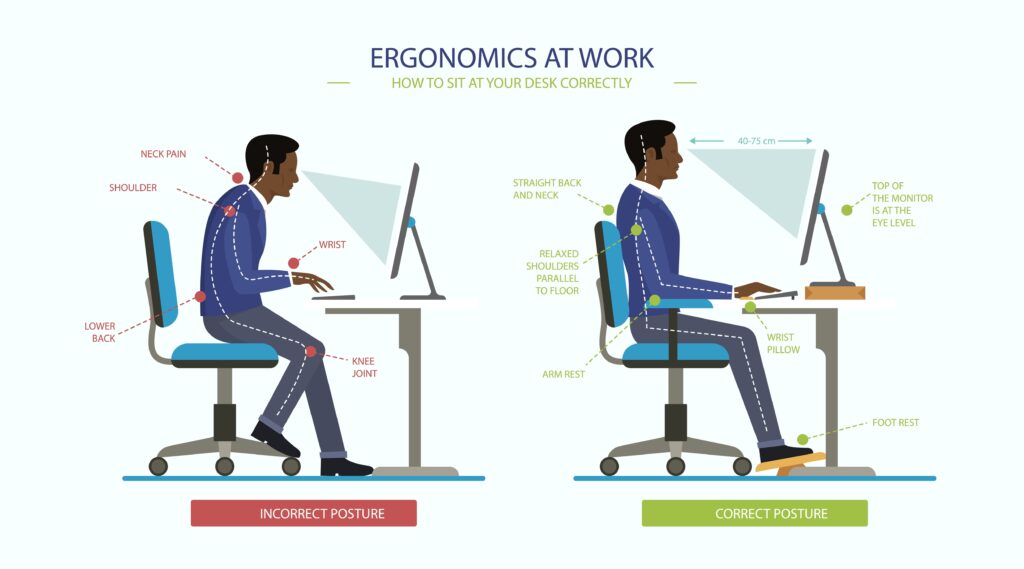
The Ideal Ergonomic Desk Setup
Whether you’re in an office or working from your kitchen table, these adjustments can make a significant difference.
1. Chair Support
- Choose a chair with adjustable lumbar support or add a rolled towel behind your lower back.
- Sit back fully so your spine is supported—not perched on the edge.
2. Monitor Position
- Your screen should be at eye level and an arm’s length away.
- Avoid looking down or hunching forward—this strains your neck and shoulders over time.
3. Keyboard and Mouse
- Keep your wrists in a neutral position—not angled upward.
- Your elbows should rest at a 90-degree angle, close to your sides.
💡 Can a bad desk setup cause a herniated disc?
Repeated pressure on your spine from slouching can contribute to disc degeneration over time. Poor alignment also increases your risk of bulging or herniated discs. Explore our herniated disc treatment options.
Healthy Sitting Habits to Prevent Pain
Even with a great setup, your body still needs movement and balance.
Take Breaks Every 30–60 Minutes
Set a timer or use an app that reminds you to stand up, stretch, or walk around—even for 2–3 minutes. These microbreaks reduce muscle tension, restore circulation, and give your spine a rest from compression.
Apply the 90/90/90 Rule
- Knees, hips, and elbows should all form a 90-degree angle when seated.
- Feet flat on the floor (use a footrest if needed).
Keep Your Core Engaged
Your core helps stabilize your spine. Practice subtle engagement by sitting tall and pulling your belly button gently inward. This takes pressure off your lower back and trains your posture muscles.
💡 What are the best stretches to do at your desk?
Try shoulder rolls, seated spinal twists, and hamstring stretches while standing. These reduce tension and improve mobility. Desk yoga and stretching bands can also help.
Ergonomics for Remote and Hybrid Workers
Working from home has its perks—but it often means working from couches or kitchen chairs.
Quick Fixes Using Household Items:
- Stack books to raise your monitor
- Use a rolled-up yoga mat or towel as lumbar support
- Repurpose a sturdy box as a footrest
Bonus Tip: Alternate Workstations
Try standing for phone calls or switching between seated and standing positions throughout the day. Sit on a stability ball for short periods to engage your core.
💡 Can walking reduce back pain from sitting all day?
Yes—walking increases circulation, decompresses the spine, and strengthens stabilizing muscles. Even 5-minute walks twice a day can make a difference. Discover the best walking spots in Newnan and the benefits of walking for back pain.
When Ergonomics Aren’t Enough
Despite best efforts, some people continue experiencing pain due to underlying issues like:
- Nerve compression
- Muscle imbalances
- Joint degeneration
- Undiagnosed spinal conditions
If pain persists for more than a few weeks, affects your sleep, or interferes with daily activities—it’s time to seek help.
Explore our Neck Pain services.
How Nexus Pain Center Can Help
At Nexus Pain Center, we specialize in diagnosing and treating pain at its source—not just masking symptoms. Our treatments include:
- Minimally invasive spinal procedures
- Nerve stimulation therapies
- Customized pain management plans
Whether you’re dealing with nagging discomfort or severe chronic pain, our experienced providers are here to help you return to a more comfortable, active life.
Schedule an appointment today.
Final Thoughts
Good posture is a great start—but true pain prevention means consistent habits and knowing when to act. Small changes to your daily routine can protect your spine, boost energy, and keep chronic pain at bay.
If your body is already speaking up, don’t wait. Nexus Pain Center is here to help you realign your life—literally.